heritage news / 30/Jan/2026 /
Boakai Drives Infrastructure-Led National Renewal
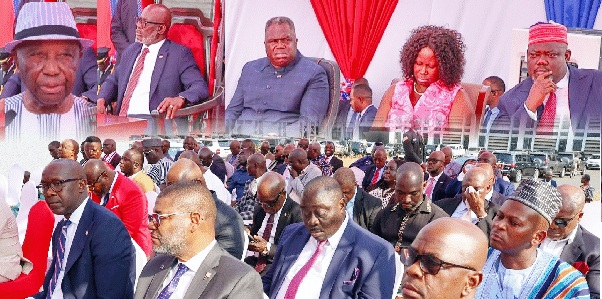
President Joseph Nyuma Boakai, Sr. has placed infrastructure and energy development at the center of Liberia’s national recovery, declaring tangible progress in road connectivity and electricity expansion during his 2026 State of the Nation Address (SONA) to the 55th Legislature.
The President reported that paved roads have increased to 20 percent nationwide, with major national corridors advancing steadily, improving trade, mobility, and access to basic services across counties.
He said road rehabilitation and construction efforts are not only enhancing connectivity but also generating employment and stimulating local economies, particularly in underserved rural areas.
On energy, President Boakai announced significant improvements in electricity access, with 63,000 new connections recorded nationwide over the past year.
Electricity tariffs have been reduced, solar power expanded, and planning accelerated for major future energy projects aimed at stabilizing supply and lowering costs for households and businesses.
The President linked energy expansion directly to industrial growth, job creation, and improved quality of life, noting that reliable power is fundamental to Liberia’s development agenda.
Turning to economic performance, President Boakai disclosed that Liberia’s economy grew by 5.1 percent in 2025, exceeding projections and marking one of the strongest growth rates in recent years.
Inflation dropped to four percent the lowest level in more than two decades while exports surged by 31.5 percent and foreign reserves increased to US$576 million, contributing to currency stability.
He projected that economic growth will exceed five percent in 2026, with average growth of six percent expected through 2028 if reforms remain on track.
On revenue and fiscal management, the President announced that domestic revenue reached a historic high of US$847.7 million in 2025, reflecting improved tax compliance and strengthened financial oversight.
The FY2026 national budget, now exceeding US$1.2 billion, was described as the largest in Liberia’s history, while public debt stands at US$2.8 billion, with the government largely current on debt servicing obligations.
Addressing investment and job creation, President Boakai revealed that nearly US$4 billion in major investment agreements were signed in the mining, rail, and energy sectors.
He reported that more than 70,000 jobs were created in 2025, driven largely by infrastructure, agriculture, social protection, and private sector initiatives.
The President further announced plans to support 30,000 youth-led businesses through the Youth Entrepreneurship and Investment Bank, aimed at expanding access to finance and skills for young entrepreneurs.
President Boakai reaffirmed commitment to the ARREST Agenda 2025–2029, which prioritizes agriculture, infrastructure, energy, education, health, governance, and sanitation as pillars of inclusive growth.
In agriculture, he said nearly 198,000 farmers received support, resulting in notable improvements in productivity and national food security.
On education, the President highlighted reforms that removed ghost teachers from payrolls, recruited qualified educators, expanded digital learning, and improved school infrastructure.
Health sector gains included reductions in maternal mortality, immunization coverage reaching 88 percent, sharp declines in medicine stock outs, and steady progress on major health facilities.
In social protection, thousands of vulnerable children were reintegrated into families and schools, while cash transfer programs supported more than 15,000 households nationwide.
Youth-focused policies expanded skills training, employment opportunities, and sports development as tools for social stability and empowerment.
On governance and democracy, President Boakai reaffirmed his commitment to the rule of law, condemning the arson attack on the Capitol Building and vowing full accountability.
He emphasized institutional reforms, anti-corruption efforts, decentralization, and cooperation among the branches of government as foundations of democratic stability.
The President highlighted legislative achievements, including the passage of the Ministry of Local Government Act, the Liberia National Tourism Authority Act, and the National Food Assistance Agency Act.
He outlined pending priority bills such as the Presidential Transition Act, the Civil Service Commission Act, and amendments to anti-corruption laws, alongside new proposals for universal health insurance, land courts, and a National Road Authority.
On security and justice, President Boakai reported intensified drug enforcement, strengthened security institutions, improved access to justice, and the placement of over 3,400 volunteers on the government payroll.
Internationally, he said Liberia has restored global credibility, securing election to the United Nations Security Council for 2026–2027 and reaffirmation of eligibility for a second Millennium Challenge Corporation Compact.
The President also cited steps toward reconciliation and accountability, including the establishment of the Office for the War and Economic Crimes Court and improved transparency through audits and prosecutions.
In closing, President Boakai pledged service-driven leadership, deeper reforms in concessions, urban planning, and decentralization, expressing confidence that Liberia is firmly on a path of progress driven by results, unity, and national resolve.


No Comment Yet!