heritage news / 27/Nov/2025 /
Chiefs Driving National Unity
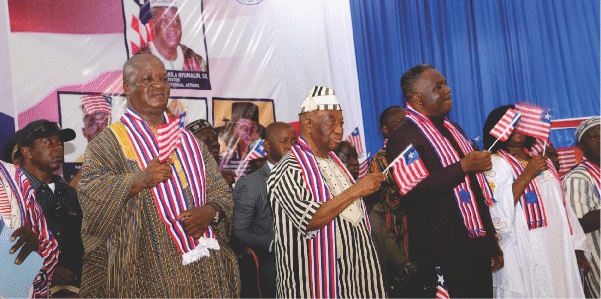
Liberia’s traditional leadership structure received a powerful boost this week as Paramount Chiefs, Clan Chiefs, Tribal Governors, and senior government officials convened in Gbarnga for the National Assembly of Chiefs and Citizens, a landmark governance forum held from November 20–22, 2025.
The gathering, hosted by the Ministry of Internal Affairs, brought together hundreds of traditional leaders from across Liberia, reaffirming their role as custodians of culture, peace, stability, and community development.
The National Assembly unfolded at a pivotal moment in Liberia’s development journey as the Government continues implementing the ARREST Agenda and the County Development Agenda aimed at transforming local governance and boosting national cohesion by 2029.
Officials underscored that the Local Government Act of 2018 gives chiefs a strengthened voice in governance, placing them at the center of public service delivery, community peace-building, and dispute resolution.
In his opening remarks, Internal Affairs officials affirmed that Liberia’s traditional governance system remains the backbone of community stability, cultural preservation, and rural development.
They emphasized that Paramount Chiefs, Clan Chiefs, and Tribal Governors are more than symbolic figures they are frontline partners in national development, peace maintenance, and social cohesion.
The Assembly follows a year of intense nationwide engagements between chiefs and the Government, culminating in a productive dialogue with President Joseph Nyuma Boakai, Sr. earlier this year.
Participants noted that these frequent engagements align with recommendations from the Truth and Reconciliation Commission, which calls for sustained interaction between citizens, chiefs, and national leaders to foster reconciliation and social stability.
The Assembly also built on resolutions adopted during the September 2025 Diaspora Conference on Peace and Reconciliation held in Washington, D.C., where Liberians abroad called for annual citizens’ dialogues with the President.
This year’s event in Gbarnga served as the first formalized National Assembly under the expanded engagement framework, bringing together traditional leaders to discuss peace, security, development, cultural preservation, economic growth, and social responsibility.
Traditional leaders highlighted that peace and security remain central pillars of their role, noting that Liberia’s progress including its historic election to a non-permanent seat on the UN Security Council reflects improved stability.
They reaffirmed their commitment to working closely with the Government to address land disputes, political tensions, and community conflicts that threaten national stability.
Chiefs praised the Government’s recent progress in combating illicit drugs and substance abuse but stressed the need for deeper community involvement to tackle the crisis.
Infrastructure emerged as a top concern, with chiefs urging the Government to prioritize the rehabilitation of feeder roads, expand district-level accessibility, and deploy earth-moving equipment nationwide.
Tribal Governors emphasized that improved logistics including motorcycles, vehicles, and communication tools would significantly enhance their ability to support local development and monitor community security.
They also highlighted the vital need for timely compensation and placement of chiefs, support staff, and tribal governors on the Government payroll to boost morale and performance.
Another key request was the modernization of traditional governance facilities, including the completion of the Chiefs’ Compound in Monrovia and the construction of additional compounds across the 15 counties.
Cultural preservation featured prominently in the discussions. Chiefs called for the development of a comprehensive national policy on traditional practices to protect positive cultural norms while eliminating harmful customs.
They also urged the Government to help promote respectful language, improve public discipline, and encourage appropriate dress codes, especially for women and girls.
Food security, a growing concern in rural communities, received strong attention as chiefs highlighted the increasing destruction of crops by wildlife.
Chiefs proposed expanding communal farming initiatives and increasing agricultural support to strengthen subsistence production across rural communities.
In a show of strong civic leadership, chiefs committed to restoring social order by prohibiting profanity in public spaces and promoting responsible public behavior.
They also pledged to use town criers to disseminate information on the implementation of the ARREST Agenda and the County Development Agenda.
On economic development, chiefs recommended that Social Development Funds be used to support transportation needs and strengthen the movement of chiefs as they perform national duties.
They further proposed that traditional leaders be included in the President’s local and international travels, ensuring grassroots voices are represented on the national stage.
Chiefs also called for revision of concession agreements to guarantee that traditional communities directly benefit from corporate operations in their regions.
In response, the Government, through President Boakai, reaffirmed its commitment to integrity, transparency, and inclusive development.
Officials announced plans to build a national diagnostic center to improve healthcare and decentralize essential health services across the counties.
The Government also pledged to expand County Service Centers to bring public services closer to citizens, reducing travel time and bureaucratic bottlenecks.
On governance, the President’s team committed to reviewing all concession agreements to strengthen corporate accountability and enhance community benefits.
They also vowed to ensure that traditional leaders are respected by security forces at checkpoints and community entry points.
In promoting culture and dignity, the Government pledged to uphold traditional titles, restoring merit-based recognition in keeping with Liberia’s cultural heritage.
Most notably, the President formalized a commitment to hold the National Assembly annually, rotating it across all 15 counties to expand citizen participation.
Officials described the Assembly as a “new chapter in Liberia’s governance system,” promoting shared responsibility between the Government and traditional leaders.
They stressed that lasting peace and development can only be achieved when national and local leaders work together under a whole-of-government approach.
As the three-day gathering concluded, chiefs and government officials signed a joint framework outlining mutual commitments for peace, development, and social order.
Participants agreed that the Assembly would serve as a continuous platform for consensus-building and collaborative problem-solving across Liberia.
Traditional leaders departed Gbarnga with renewed confidence, energized by the Government’s commitments and determined to strengthen their contribution to national development.
Residents of Bong County hailed the event as a symbol of unity, cultural pride, and a renewed partnership between the people and their leaders.
Liberia pushes forward under the ARREST Agenda, the National Assembly of Chiefs stands as a powerful reminder that the path to peace, stability, and progress begins with collective leadership from all sectors of society.



No Comment Yet!