heritage news / 21/Oct/2025 /
Ex-Pres. Admits Past Failures, Praises Boakai Progress
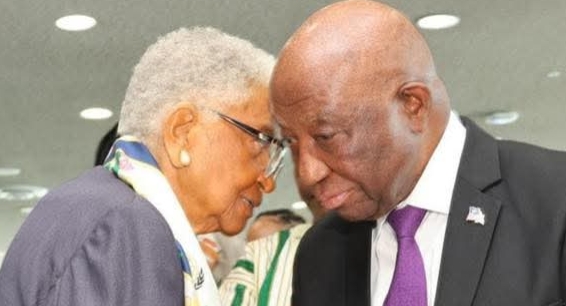
Former President Ellen Johnson Sirleaf has publicly admitted that her administration faced serious challenges and did not achieve all its intended goals, marking one of her most candid reflections since leaving office.
Speaking on the popular national radio program “Changing Minds and Changing Attitudes,” the Nobel Peace Laureate acknowledged that while her government achieved significant milestones in rebuilding postwar Liberia, there were areas that fell short of expectations.
Madam Sirleaf said her administration encountered “tough realities” in governance, particularly in infrastructure, utilities, and public sector reform.
She noted that despite her team’s efforts, not all goals could be realized due to the complexity of national recovery after years of conflict.
However, the former President, often hailed as Africa’s “Iron Lady,” commended the current administration under President Joseph Nyuma Boakai for what she described as “visible progress and encouraging steps” across critical sectors.
She specifically cited the Liberia Electricity Corporation (LEC), the Liberia Water and Sewer Corporation (LWSC), and the Roberts International Airport (RIA) as examples of areas where tangible improvements have been made under President Boakai’s leadership.
“These developments are signs of continuity and growth, no administration can do everything, but what matters is that progress continues and the people benefit,” Sirleaf remarked.
Her acknowledgment of the Boakai government’s performance is seen by many observers as a powerful gesture of statesmanship and unity, particularly given her long history with the ruling Unity Party, where President Boakai served as her vice president for twelve years.
Political analysts say Sirleaf’s comments could help foster a sense of political maturity and continuity in Liberia’s democratic governance, highlighting that leader must not only celebrate successes but also recognize where lessons can be learned.
During the interview, Madam Sirleaf emphasized that genuine development requires sustained commitment to reform, accountability, and national cooperation.
She urged current and future leaders to remain focused on building institutions rather than individuals.
“Liberia’s journey is ongoing. Each administration must learn from the past and strengthen what is working, rather than starting over each time,” she said.
Her remarks have sparked mixed public reactions, with some praising her humility and willingness to admit past missteps, while others argue that her acknowledgment come too late, given the enduring effects of corruption and weak institutions during her presidency.
Still, many view her statement as a significant moment of reflection one that may inspire a new tone of collaboration between the nation’s past and present leadership.
A senior government source welcomed Sirleaf’s comments, noting that President Boakai’s administration “values the constructive recognition” and remains committed to advancing reforms in energy, water, infrastructure, and governance.
The source added that the government continues to prioritize accountability, transparency, and service delivery as central pillars of the Boakai leadership agenda.
As Liberia works to solidify its democratic gains, Sirleaf’s rare admission and her praise for Boakai’s leadership could mark a turning point in fostering a more cooperative and forward-looking political culture.
Her message, blending humility with hope, serves as a reminder that progress is built not only through policies but also through the willingness of leaders past and present to reflect, reconcile, and work for the common good.


No Comment Yet!