heritage news / 17/Dec/2025 /
HPX Faces Major Hurdles …..Amidst Rail Access Disputes
The $2.8 billion Ivanhoe Atlantic concession agreement is facing significant obstacles, primarily stemming from unresolved issues with Guinean government approval and disagreements over third-party rail access.
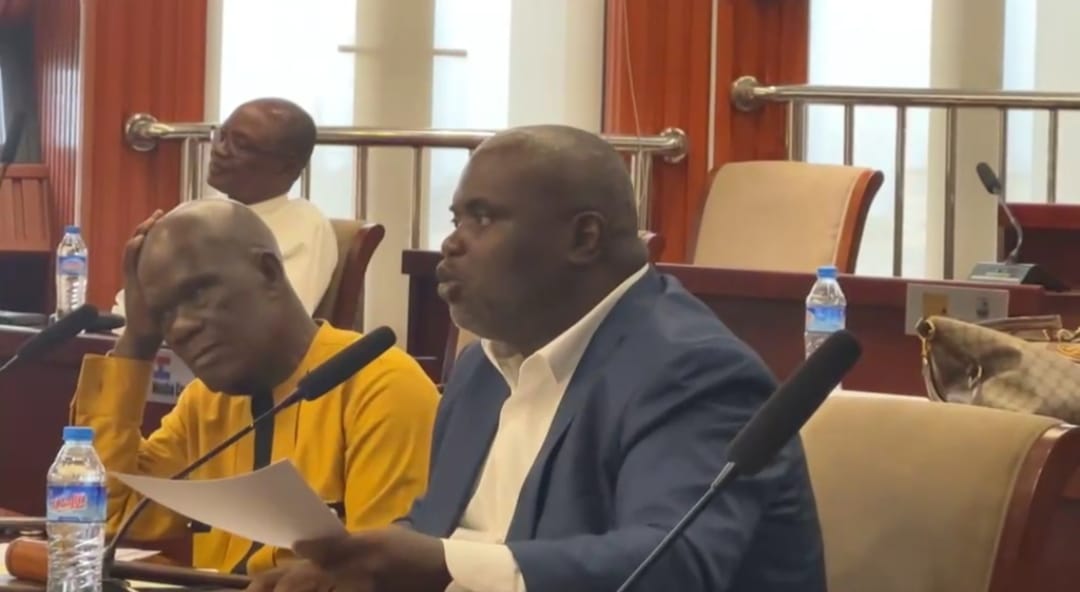
These challenges came to the forefront during a hearing by the Liberian Senate Joint Committee on Concessions, Investments, Transport, and Judiciary on December 15, 2025.
A key issue in the dispute is the lack of formal recognition from the Guinean government, with the only official communication on file being a 2020 letter from former President Alpha Condé.
During the hearing, Senator Saah Joseph, chair of the Senate Joint Committee, raised concerns about the absence of updated documentation, questioning whether any recent communication had been received from the new Guinean administration.
“We only have this outdated letter from 2020. Has there been any communication from the new government? If so, we need it now,” Senator Joseph demanded.
The lack of response from the Guinean government has frustrated the Liberian National Investment Commission (NIC), which has made multiple attempts to engage with Guinea through the Guinean Embassy in Monrovia.
NIC Chief Executive Officer Jeff B. Blibo confirmed that despite these efforts, no reply had been forthcoming.
“We’ve tried every diplomatic avenue, but there’s been no response,” Blibo told the committee, explaining that attempts were made during the negotiation phase, but they were unsuccessful.
Senator Abraham D. Dillon of Montserrado County, who also chairs the Senate Foreign Affairs Committee, criticized the NIC’s handling of the issue.
He suggested that the Ministry of Foreign Affairs should have been the proper channel for communications with Guinea, rather than the NIC, arguing that this misstep could be the reason behind the lack of response from the Guinean government.
In contrast, Transport Minister Sirleaf R. Tyler reassured the Senate that all required documents had been submitted, stressing that Guinea’s ongoing interest in the project was evident, given that the country holds a 15% stake in the venture.
He emphasized that Guinea stood to benefit from access fees and the planned steel facility, reinforcing that the mutual interest between Liberia and Guinea remained intact.
While the Guinean government’s approval is crucial for the project to move forward, the issue of third-party rail access is another significant stumbling block.
Senators Alex J. Taylor and Samuel Kogar raised concerns about the role of AML in controlling Liberia’s rail system, especially in light of the Ivanhoe/HPX concession.
They questioned whether AML’s involvement in the agreement might create operational conflicts.
Cllr. Charles D. F. Karmo, II, Liberia’s Deputy Minister for Economic Affairs, responded to these concerns by clarifying that AML’s rights to manage the rail system extend until 2030 under an amended Mineral Development Agreement (MDA).
This has complicated the inclusion of third-party rail access under the Ivanhoe/HPX concession.
Karmo further explained that the government’s long-term policy calls for the establishment of a National Rail Authority, which will take over control of the rail system after 2030.
The current Mineral Development Agreement under negotiation includes provisions for third-party access, but this will only come into effect once AML’s rights expire, which is set for 2030.
The government’s new approach to rail management involves a shift in control from AML to a government-appointed, independent operator after 2030.
This transition is part of a broader plan to open the rail system to multiple users, balancing AML’s existing rights with future third-party access.
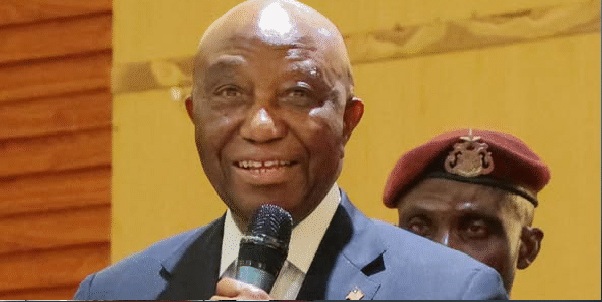
President Joseph N. Boakai's Executive Order issued in October 2024 further solidifies the government's commitment to this shift, mandating the creation of a National Rail Authority to regulate rail access and ensure fair competition.
This order sets the stage for a more equitable distribution of rail resources after 2030.
Despite the ongoing negotiations and the challenges in securing a final agreement, there is optimism that the Ivanhoe Atlantic concession can still move forward.
However, much depends on resolving the issues with Guinea’s approval and the creation of a framework for third-party rail access.
The next steps in the process will likely hinge on whether the Guinean government can provide the necessary formal approval and whether all stakeholders can agree on the terms of the rail access agreement.
The outcome of these discussions will have a major impact on the future of the concession and its potential benefits to both Liberia and Guinea.
In the meantime, stakeholders remain cautiously optimistic that a resolution can be reached, allowing the $2.8 billion project to proceed as planned.
Meanwhile, with several major hurdles still to be cleared, it remains to be seen how quickly these issues can be resolved.


No Comment Yet!