By J. Yekeh F. Kwaytah / 12/Aug/2025 /
LRA, PUL Launch Training on Tax Reporting
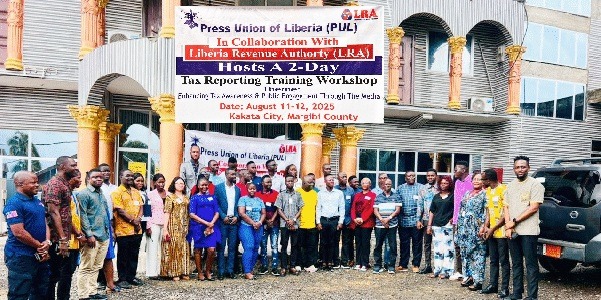
In a landmark move to strengthen media coverage on tax issues and enhance public awareness on Liberia’s revenue system, the Liberia Revenue Authority (LRA), in partnership with the Press Union of Liberia (PUL), has launched a two-day training program focused on tax reporting.
The workshop, which kicked off today in Kakata, Margibi County, brings together 30 journalists from Montserrado and Margibi Counties to equip them with the knowledge and tools to report accurately and effectively on taxation matters.
The training, which is fully sponsored by the LRA at a cost of US$6,891, marks a significant step in fostering a stronger partnership between the media and the LRA, as both institutions aim to bridge the knowledge gap and improve public understanding of tax-related issues in Liberia.
The event was opened with a powerful speech from Julius Kanubah, the President of the Press Union of Liberia, who emphasized the importance of capacity building for journalists, especially in areas like tax reporting, which remain underreported in the country.
“As journalists, it is our responsibility to be well-equipped to cover all issues, including taxation. This training is a step toward ensuring that we report accurately, responsibly, and in a way that serves the public interest,” Kanubah said in his opening remarks.
He also recognized the LRA’s role in not just collecting revenue, but also in educating and sensitizing the public, particularly through its collaboration with the media.
The collaboration between the LRA and PUL comes at a time when there is a growing need to improve media literacy on tax matters in Liberia. Journalists, particularly in the radio and online sectors, have been found to lack a comprehensive understanding of tax concepts, reporting techniques, and LRA processes.
A pre-training survey of the participants revealed significant gaps in their knowledge, with many journalists expressing a desire to better understand domestic and customs taxes.
“The media plays an indispensable role in shaping public perception. If journalists are not properly equipped to report on taxes, they risk misinforming the public,” noted D. Kaihenneh Sengbeh, Manager of the LRA’s Communication, Media & Public Affairs (CMPA) Section, as he addressed the gathering.
Sengbeh also underscored that this training is part of a broader 2025 Media Engagement Strategy by the LRA to foster a well-informed media capable of reporting on taxation with clarity and authority.
The training covers a range of crucial topics, including an introduction to the LRA, domestic tax procedures, customs regulations, and practical skills on how to report on tax matters.
Participants will also delve into media ethics, a key component of the training, to ensure that they adhere to professional standards when reporting on sensitive tax issues.
The sessions are designed not only to impart knowledge but also to provide practical tools that can be immediately applied in their journalistic work.
For many journalists in attendance, the training offers a unique opportunity to expand their skills and improve the quality of their reporting.
“Tax reporting is not only about numbers; it’s about telling the story of how these numbers impact our people and our country,” said one participant, expressing enthusiasm about the opportunity to learn from experts in the field.
Kanubah also emphasized that the PUL is committed to providing continuous support for journalists, particularly in areas that directly impact national development.
“As we strengthen our capacity as journalists, we also strengthen our ability to advocate for better tax policies, greater transparency, and improved government accountability,” he added.
One of the key goals of the training is to empower journalists to become ambassadors for tax compliance. With a better understanding of the tax system, they will be able to report in a way that is not only informative but also encourages citizens to fulfill their tax obligations.
This, in turn, will support the LRA’s efforts to boost revenue collection and contribute to Liberia’s development goals.
Sengbeh highlighted that the LRA’s partnership with the PUL is part of a long-term strategy to build a sustainable network of media professionals who can effectively communicate tax policies to the public.
“This is just the beginning,” he said, outlining plans for future follow-up trainings, joint awareness campaigns, and the creation of a national network of journalists dedicated to tax reporting.
The event also provides a platform for journalists to connect with their peers and build networks that will serve them in their future reporting.
“By sharing experiences and knowledge, we become stronger as a collective. This is an opportunity to learn from each other and grow as professionals,” said a senior journalist from Monrovia who participated in the training.
The LRA’s commitment to media engagement was further demonstrated by the hands-on approach taken in organizing the training.
The LRA’s CMPA Section ensured that all logistical aspects, from accommodation to transportation, were well taken care to create a conducive environment for learning. This attention to detail reflects the LRA’s ongoing effort to build a strong, mutually beneficial relationship with the media.
For the LRA, this training is not a one-off event but part of a broader initiative to increase media capacity and enhance public understanding of tax systems.
Future initiatives will include certification upon completion of the program, distribution of learning materials, and even opportunities for journalists to attend international tax reporting workshops.
The two-day training progresses, the participants are expected to leave with enhanced knowledge and practical skills that will allow them to play a more active role in shaping the narrative around taxation in Liberia.
With the LRA and PUL working together, the hope is that the media will continue to serve as a key partner in promoting tax compliance, transparency, and national development.
In closing, both Kanubah and Sengbeh expressed their gratitude to the participants for dedicating their time to this important cause, reaffirming their commitment to continue working together to elevate tax reporting in Liberia.
This partnership, they emphasized, is crucial for the country’s growth and development in the years ahead.




No Comment Yet!