By J. Yekeh F. Kwaytah / 22/Jan/2026 /
Nyonblee Port Power ….MoJ Flags Flaws
Even as the Ministry of Justice (MOJ) advises President Joseph Nyuma Boakai to veto the re-enacted Liberia Sea and Inland Ports Regulatory Act of 2025 for conflicting with the Liberia Maritime Authority (LiMA) Act of 2010, Senate Pro Tempore and Grand Bassa County Senator Nyonblee Karngar Lawrence is intensifying pressure for presidential assent fueling suspicions that the drive for “reform” may conceal a deeper political agenda.
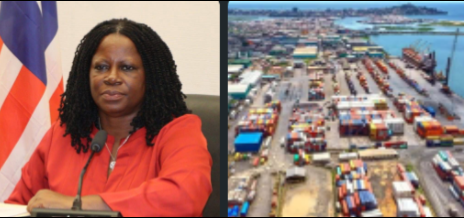
In a blistering legal opinion, Acting Justice Minister Cllr. Cora Hare-Konowa warned that the Legislature failed to correct the same defects that prompted an earlier presidential veto.
Despite Senate assurances that overlapping maritime powers were removed, the MOJ says a clause-by-clause review proves otherwise, with port safety regulation, IMO convention implementation, vessel inspection and detention, dangerous goods regulation, and operational authority over ports still embedded in the bill.
Yet, as legal alarms ring, Senator Lawrence has remained the loudest advocate for immediate enactment an urgency critics say is less about decentralization and more about who controls Liberia’s most strategic port assets, especially the Port of Buchanan in her home county.
Political observers note that the bill’s architecture would weaken centralized oversight, dilute LiMA’s authority, and create a new regulatory body with sweeping powers and unclear boundaries conditions the MOJ warns could create legal uncertainty for operators and government alike.
“When two agencies can regulate the same space without precedence, confusion becomes policy,” one legal analyst remarked.
The controversy has split Grand Bassa County’s own leadership. The Chair of the Grand Bassa County Legislative Caucus, Senator Gbehzohngar Milton Findley, has publicly opposed the bill, describing it as premature and destabilizing.
The rift has sharpened questions about whether county interest is being subordinated to personal political leverage.
Critics argue that the so-called decentralization plan amounts to fragmentation, not reform.
Under the proposal, the National Port Authority (NPA) would be dismantled within six months, senior management dismissed, and asset and liability decisions handed to a small transitional group an approach experts call reckless given the NPA’s contracts, debts, and workforce obligations.
Beyond governance risks, infrastructure realities loom large. Ports in Buchanan, Greenville, and Harper are widely acknowledged to be under-equipped, with aging docks, limited storage, and unreliable utilities.
Economists warn that autonomy without massive upfront investment could render these ports uncompetitive, driving away trade rather than attracting it.
Financial sustainability is another flashpoint. The bill requires each port to contribute five percent of quarterly revenues to a new regulatory authority, even as most ports depend on central support. Detractors say this could push weaker ports into deficit ironically forcing future government bailouts and defeating the decentralization narrative.
On the streets and airwaves, citizens are increasingly vocal. Call-in programs and community meetings echo a common refrain: “Is this decentralization or personalization?” Some accuse Senator Lawrence of using legislative muscle to consolidate influence over Buchanan Port, framing public interest as cover for elite capture. These claims, while unproven, underscore the depth of public distrust now surrounding the bill.
Supporters counter that the National Port Authority has long favored the Free Port of Monrovia, neglecting regional ports, and that autonomy would unlock local investment and jobs. But the MOJ’s findings complicate that defense, suggesting the legal framework itself is unsound and risks paralyzing the sector with overlapping mandates.
With the House of Representatives having concurred and the bills now awaiting presidential action, President Boakai faces a stark choice: heed his Justice Ministry’s warning and veto legislation deemed legally defective or sign laws that critics say could trade national coherence for political expediency.
As the clock ticks, one question dominates Liberia’s political conversation: What is really under Nyonblee’s sleeves bold reform for national growth, or a calculated bid for control over Bassa’s most prized economic gateway?



No Comment Yet!