heritage news / 15/Jan/2026 /
U.S. Visa Freeze Hits Liberia, 74 Nations
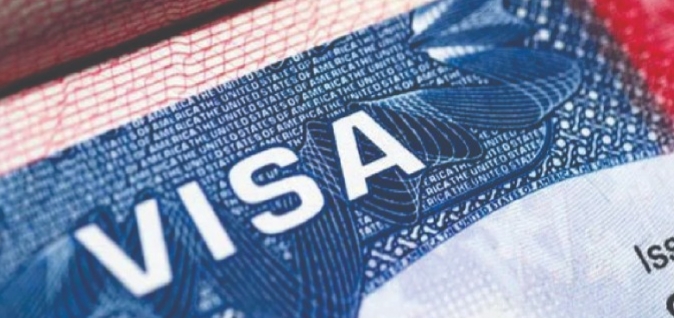
The United States government has announced a sweeping pause on immigrant visa processing for Liberia and 74 other countries, a move set to begin January 21, 2026 and continue indefinitely as authorities reassess screening procedures.
The decision comes from the U.S. Department of State in a memo directing consular officers worldwide to refuse new immigrant visas under existing law while the review takes place.
Officials said the pause is part of a broader effort to strengthen enforcement of the so-called “public charge” provision of U.S. immigration law, which allows the government to deny visas to applicants deemed likely to become reliant on public benefits.
The affected countries span Africa, Asia, the Middle East, Latin America and the Caribbean, including Somalia, Russia, Afghanistan, Brazil, Iran, Iraq, Egypt, Nigeria, Thailand, Yemen and Liberia.
The State Department has not specified when the reassessment of procedures will conclude, meaning the suspension could extend for months or longer.
Under the directive, consular officers are instructed to refuse immigrant visas if applicants are judged likely to depend on public assistance, taking factors such as health, age, English proficiency, financial resources, and potential long-term care into account.
Non-immigrant visas, including those for tourism, business, study or temporary work, are not directly affected by this pause, according to multiple reports.
Liberia’s inclusion in the list has prompted concern among families, professionals and students with plans to travel to the United States, many of whom face uncertainty about future opportunities.
U.S. officials maintain the measure does not target any nationality on the basis of identity, but is instead intended to ensure that new arrivals are self-sufficient and not likely to require government support.
Critics of the policy argue that the criteria for determining “public charge” status are subjective and may disproportionately disadvantage applicants from low-income countries, potentially harming families and economies.
Immigrant advocacy groups have expressed concern that the suspension could separate families and delay reunification for spouses, children, and other relatives of U.S. citizens and lawful permanent residents.
Some experts also warn that a prolonged pause could discourage international students and skilled professionals at a time when the U.S. seeks to remain competitive globally.
A State Department spokesperson reiterated that the public charge provision has been part of U.S. immigration law for decades, but enforcement has varied across different administrations and policy priorities.
Countries on the list include a broad range of nations beyond the most-noted examples, extending to several in Africa and the Caribbean whose citizens had believed visa access would remain stable.
With the implementation date of January 21 approaching, officials and affected applicants alike are monitoring updates from U.S. embassies and consulates as questions about timelines, exceptions and future policy unfold.



No Comment Yet!