heritage news / 22/May/2026 /
Boakai Sends Anti-Corruption Bills
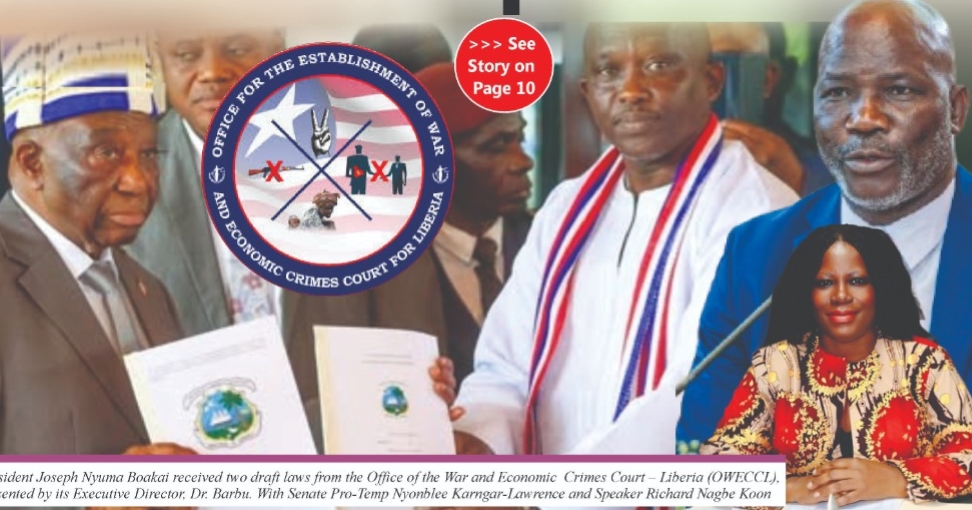
President Joseph Nyuma Boakai has submitted two landmark legislative proposals to the National Legislature aimed at strengthening Liberia’s justice system, enhancing accountability, and reinforcing the rule of law.
The bills were formally transmitted to the leadership of the Legislature, including House Speaker Richard Koon and Senate President Pro-Tempore Nyonblee Karnga-Lawrence for consideration and possible enactment.
The announcement was made on May 20, 2026, from the Executive Mansion in Monrovia, where the presidency outlined the intent and scope of the proposed reforms.
The two bills include an Act Establishing a War and Economic Crimes Court and an Act adopting a new Title 17(a) of the Liberian Code of Laws Revised to establish a National Anti-Corruption Court.
According to the presidency, both proposals are grounded in Liberia’s historical experience, constitutional provisions, and international legal obligations relating to justice, governance, and human rights.
The proposed War and Economic Crimes Court is intended to address longstanding calls for accountability linked to Liberia’s civil conflicts and related economic crimes.
It is also designed to implement recommendations of the Truth and Reconciliation Commission and commitments under the Accra Peace Agreement.
The court would have jurisdiction over war crimes, crimes against humanity, gross human rights violations, and economic crimes allegedly committed during periods of instability in Liberia.
The presidency stated that the initiative reflects Liberia’s obligation to confront impunity and promote national reconciliation through formal judicial accountability mechanisms.
The second proposal, the National Anti-Corruption Court, seeks to strengthen Liberia’s capacity to prosecute corruption-related offenses more effectively.
It highlights concerns that existing judicial institutions face limitations in handling complex financial crime cases, thereby weakening enforcement and deterrence efforts.
The proposed court would serve as a specialized judicial body focused exclusively on corruption cases and related economic crimes.
According to the Executive Mansion, both legislative initiatives are intended to reinforce transparency and restore public confidence in governance institutions.
President Boakai’s submissions emphasized that the enactment of the bills would strengthen the rule of law and improve accountability mechanisms across the public sector.
The proposals are also expected to enhance trust in government institutions and improve overall governance performance.
In addition, the legislation aims to address historical injustices stemming from Liberia’s conflict periods while strengthening economic crime prosecution systems.
The presidency noted that the reforms would also improve transparency in public administration and align Liberia with international standards on justice and anti-corruption practices.
President Boakai urged the National Legislature to give the bills urgent and careful consideration in the interest of national progress and stability.
“These reforms represent a decisive step toward justice, reconciliation, and sustainable national renewal,” the President stated in his communication.
He further expressed readiness to work closely with the Legislature, the Judiciary, and other national stakeholders to ensure effective implementation of the proposed reforms.
The submission marks one of the most significant justice sector reform initiatives under the current administration, with potential long-term implications for accountability and governance in Liberia.



No Comment Yet!