heritage news / 20/May/2026 /
Jeety Rubber Growth Draws U.S. Praise ...Boosts Liberia’s Investment Appeal
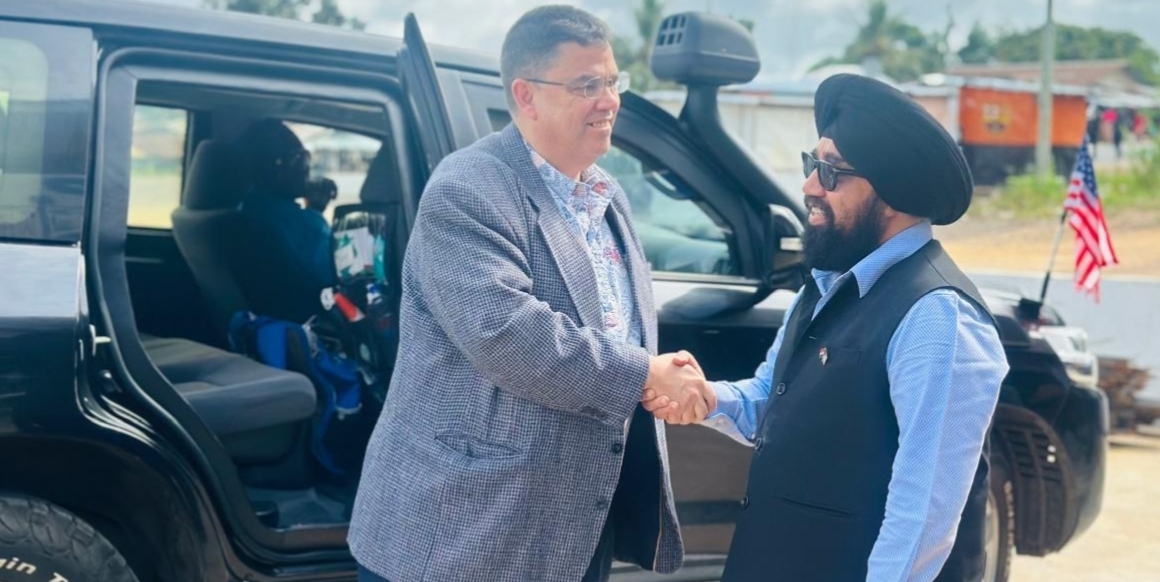
U.S. Charge d’Affaires to Liberia, Joseph Zadrozny, has praised Jeety Rubber and its subsidiary, Salala Rubber Corporation (SRC), for their rapid growth and community-centered investment in Weala, Margibi County, describing the company as a strong example of Liberia’s growing business potential.
During a visit to the company’s operations, Zadrozny said Jeety Rubber’s achievements demonstrate how private investment, local partnerships, and shared ambition can create jobs, improve lives, and strengthen Liberia’s economy.
He said the success of the company gives him confidence to promote Liberia as a destination for international investment, while encouraging Liberian-Americans in the diaspora to return home and invest.
“It takes not just an investor or workers, but an entire community working together,” Zadrozny said, noting that seeing tangible progress allows him to share positive stories about Liberia’s development with potential investors abroad.
Jeety Rubber, part of the Jeety Conglomerate, acquired SRC, making Liberia’s fourth-largest rubber producer, from Socfin in August 2024 after operations were shut down following violent labor unrest over housing and healthcare concerns. The closure left more than 800 workers unemployed.
Since the acquisition, operations have resumed under businessman Upjit Singh Sachdeva, widely known as Jeety, who described the reopening as a fresh start for SRC, its workforce, and Liberia’s economy.
The company now employs more than 1,500 workers and contractors, many drawn from Weala and nearby communities.
Beyond production, Jeety Rubber and SRC have invested heavily in social programs, including nine deep-bore wells serving over 6,000 residents, a growing 50-bed clinic with plans for four operating theaters and an eye center, a US$10,000 annual scholarship fund, and community feeding initiatives.
Zadrozny toured the rubber factory, maternity ward, clinic, classrooms from early childhood to secondary education, and science laboratories said the company’s success is rooted in investments that go beyond industrial production.
“When a factory expands, it also needs educated people with science and math skills to fill future jobs,” he said, highlighting the importance of education, healthcare, and community development in sustaining long-term economic growth.
Zadrozny joins a growing list of foreign diplomats recognizing Jeety Rubber’s impact. Slovak Ambassador Martin Podstavek, after visiting the facility in February, described the company as proof of Liberia’s improving investment climate.
In March 2025, Indian Ambassador Manoj Bihari Verma also commended Sachdeva’s efforts to improve schools, healthcare, and worker housing, while announcing plans to explore scholarship opportunities for Margibi County residents.
The company has also earned praise within Liberia’s agricultural sector. In March, the Rubber Planters Association of Liberia (RPAL) and the Rubber Development Fund Incorporated (RDFI) honored Sachdeva for his contribution to the rubber industry, giving him the Liberian name “Kolleh,” meaning “a bright and good man.”
The recognition cited Jeety Rubber’s continued purchase of rubber from farmers during a market disruption when other buyers halted purchases over pricing disputes.
The company also extended interest-free loans to more than 100 farmers to support rubber farm expansion and replanting.
Looking ahead, Sachdeva said his long-term ambition is to position Liberia as a tire-producing nation by 2028. The factory currently processes five tons of rubber per hour and is undergoing expansion to boost production to 550 tons daily.
Sachdeva called on farmers and producers to support the effort by ensuring a reliable supply of raw rubber, stressing that the dream of producing Liberia’s first locally made tires depends on access to enough locally sourced rubber.
“If we get the rubber supply needed, the dream Liberians have carried for over 100 years to produce made-in-Liberia tires can become a reality by 2028,” he said.


No Comment Yet!