heritage news / 10/May/2026 /
Morocco Gains Diplomatic Momentum After Smara Attack
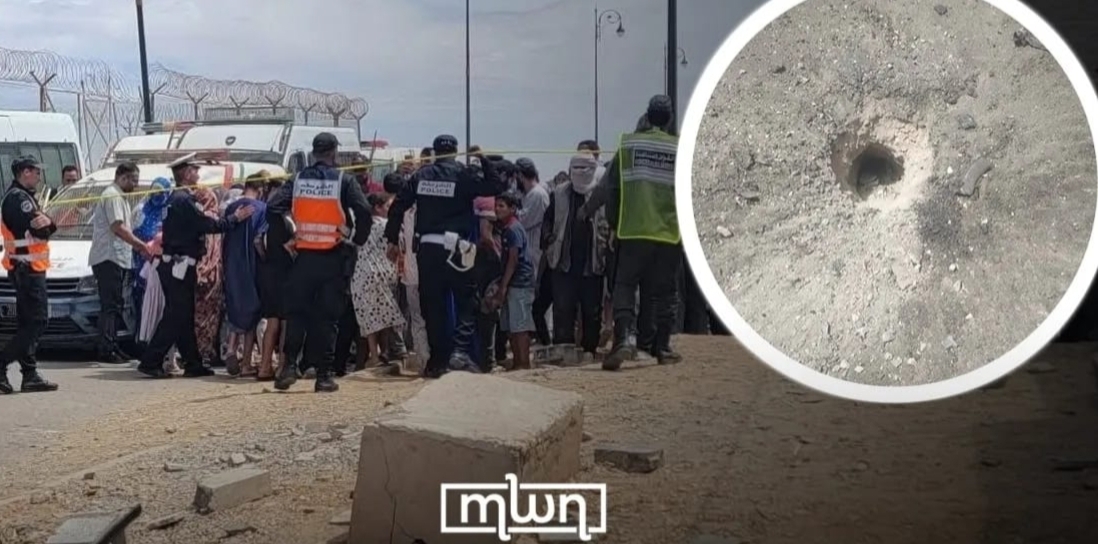
The recent attack on the Moroccan city of Smara has triggered renewed international debate over the future of the Western Sahara dispute, while simultaneously strengthening Morocco’s diplomatic standing among several global powers.
Analysts across the region argue that the operation, claimed by the Polisario Front, may ultimately undermine the separatist movement’s own strategic objectives rather than advance them.
Observers note that the attack comes at a time when Morocco has been consolidating international support for its autonomy initiative in Western Sahara.
In recent years, Rabat has secured endorsements from influential countries that increasingly view the autonomy proposal as the most realistic path toward resolving the long-running dispute.
The latest escalation has also revived comparisons with the 2020 Guerguerat incident, when Polisario elements attempted to disrupt commercial traffic linking Morocco with Mauritania and broader Sub-Saharan Africa.
At the time, the operation was widely interpreted as an effort to draw renewed global attention to the conflict after years of diplomatic stagnation.
Morocco’s response in Guerguerat, however, altered the trajectory of the dispute.
Moroccan authorities moved swiftly to reopen the crossing and restore commercial traffic, while many countries expressed support for maintaining regional stability and uninterrupted trade routes.
The operation marked a turning point in Morocco’s diplomatic campaign.
Only weeks after the Guerguerat developments, the United States officially recognized Morocco’s sovereignty over the Sahara, a move that dramatically reshaped international discussions surrounding the conflict.
That decision was later followed by Spain’s endorsement of Morocco’s autonomy proposal and France’s growing alignment with Rabat’s position.
Supporters of Morocco’s diplomatic approach argue that these developments have gradually shifted the balance within international institutions.
In particular, United Nations Security Council Resolution 2797 has been interpreted by many Moroccan analysts as reinforcing the autonomy initiative as the principal framework for a political solution.
At the same time, growing discussions surrounding the future of the United Nations Mission for the Referendum in Western Sahara, known as MINURSO, have added another layer of complexity to the issue.
Some diplomatic circles have questioned whether the mission’s mandate still reflects current political realities after decades without a definitive breakthrough.
For Algeria, which has long backed the Polisario Front politically and diplomatically, maintaining the mission’s current framework remains strategically important.
Algerian officials continue to defend the principle of self-determination, while Morocco insists that autonomy under Moroccan sovereignty offers the only practical compromise.
Against this backdrop, the Smara attack has been viewed by several observers as an attempt to demonstrate that tensions in the region remain unresolved.
Although the attack itself was limited in operational impact, its political symbolism quickly attracted widespread international attention.
Instead of weakening Morocco’s position, however, the incident appears to have accelerated international sympathy toward Rabat.
Several governments rapidly condemned the attack and reiterated support for political negotiations grounded in Morocco’s autonomy initiative.
The United Arab Emirates issued one of the strongest responses, describing the attack as a threat to regional security and stability.
Emirati officials reaffirmed their support for Morocco’s territorial integrity and emphasized the importance of preserving peace and development throughout the region.
European reactions also reflected growing alignment with Morocco’s approach.
The United Kingdom, France, Belgium, and the Czech Republic all condemned the escalation while expressing support for diplomatic efforts consistent with United Nations resolutions and Morocco’s autonomy proposal.
The Czech Republic’s statement was particularly notable because it explicitly referenced Resolution 2797 and described Morocco’s autonomy plan as the basis for a lasting and mutually acceptable solution.
Similar language has increasingly appeared in statements from governments seeking to encourage compromise while avoiding prolonged instability.
Meanwhile, discussions in the United States have added further pressure on the Polisario Front.
Bipartisan lawmakers in Congress have introduced proposals aimed at classifying the group as a Foreign Terrorist Organization, citing alleged links to armed networks and regional instability.
Although such legislation may face procedural and political hurdles, analysts say the very existence of these proposals represents a significant shift in Washington’s political climate regarding the conflict.
Morocco’s supporters believe the Smara incident may further strengthen arguments in favor of tougher measures.
Under American law, the executive branch possesses broad authority to designate organizations as terrorist entities through the State Department or Treasury Department without requiring a separate act of Congress.
This possibility has fueled speculation that future US administrations could adopt a more assertive posture toward the Polisario Front.
The response from the United States Mission to the United Nations was also closely watched.
American diplomats condemned the Smara attack and reaffirmed support for a political process centered on autonomy as outlined in Resolution 2797.
For many observers, the statement reflected Washington’s determination to preserve momentum toward a negotiated settlement.
Regional analysts further argue that Algeria’s handling of the conflict has increasingly struggled to adapt to changing geopolitical dynamics in North Africa.
As international alliances evolve and economic priorities shift, Morocco has managed to position itself as a stable strategic partner for both Western and Gulf nations.
Moroccan diplomacy, supported by expanding partnerships across Africa, Europe, and the Middle East, has continued to capitalize on these developments.
Rabat has invested heavily in infrastructure, trade corridors, and regional cooperation initiatives designed to strengthen its influence throughout the continent.
The Smara attack therefore arrives at a delicate moment for the Polisario Front and Algeria.
Rather than reversing Morocco’s diplomatic gains, the escalation has reinforced international support for Morocco’s autonomy proposal and deepened the perception that Rabat currently holds the strongest position in shaping the future direction of the Western Sahara issue.




No Comment Yet!